
What Is SEO and Why Is It Important?
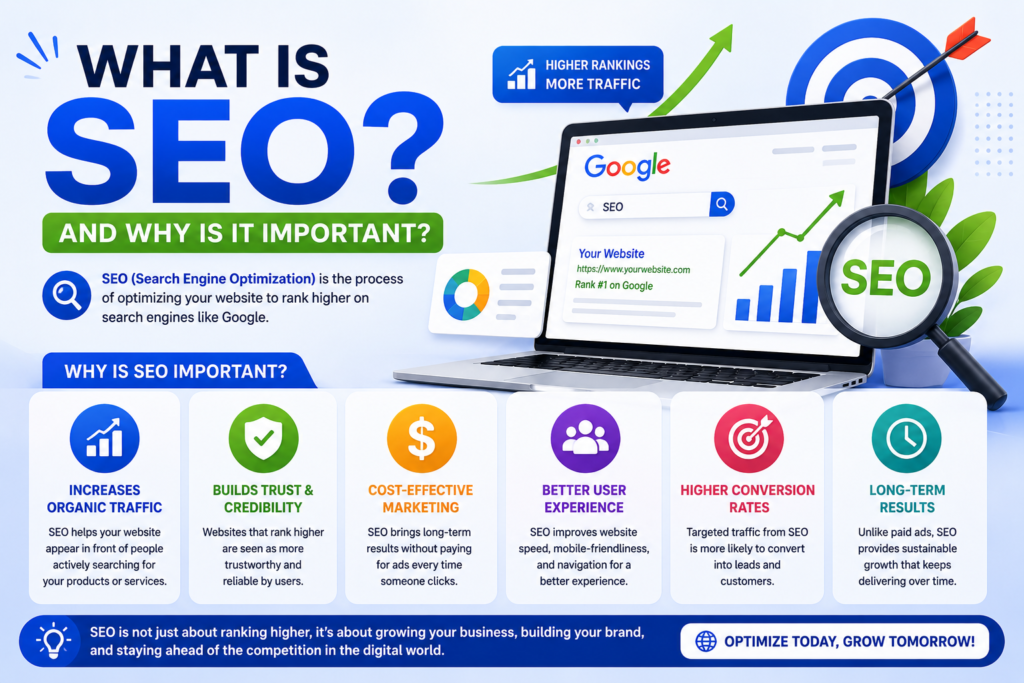
(Search Engine Optimization) is the process of optimizing a website to improve its visibility on search engines like Google, Bing, and Yahoo.
The main goal is to increase organic traffic by helping your website appear higher in search results when users search for related keywords.
Why SEO Matters
Here are the biggest reasons it is important:
- Increases website traffic organically
- Builds trust and authority
- Improves user experience
- Generates quality leads
- Reduces advertising costs
- Delivers long-term results
Unlike paid ads, It can continue driving traffic even after your content is published.
How Search Engines Work
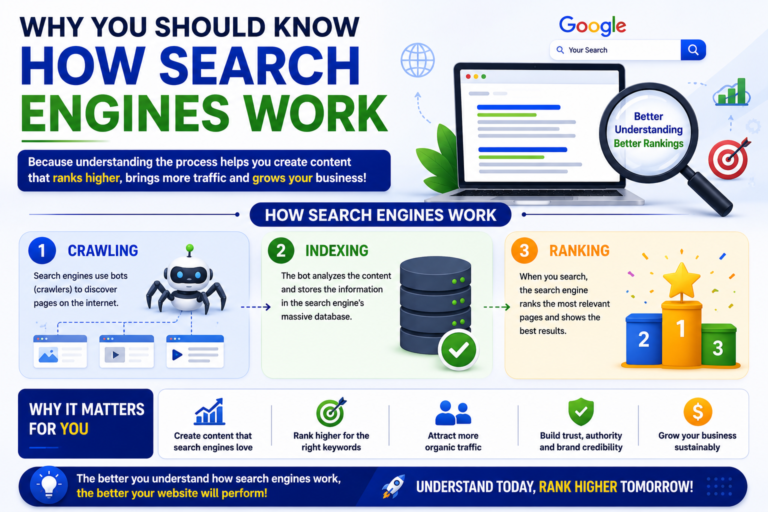
To understand better, you need to know how search engines work.
Search engines follow three steps:
- Crawling – Search bots discover pages online
- Indexing – Pages are stored in Google’s database
- Ranking – Google decides which pages appear first
Google uses hundreds of ranking factors to determine the best results for users.
On-Page SEO for Beginners
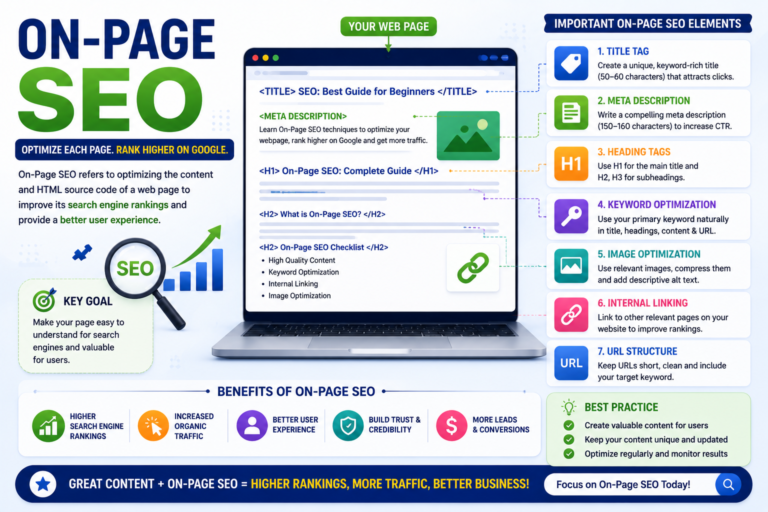
1. Use the Focus Keyword Properly
Place the keyword “SEO” naturally in:
- Title
- Meta description
- Headings
- First paragraph
- Image alt text
- URL slug
2. Write High-Quality Content
Google rewards helpful, informative, and original content.
Good SEO content should:
- Solve user problems
- Be easy to read
- Include headings and bullet points
- Provide updated information3. Optimize Title Tags
3. Optimize Title Tags
Your SEO title should:
- Be under 60 characters
- Include the keyword
- Encourage clicks
4. Use Internal Links
Internal links help users and search engines navigate your website.
Internal Link Placeholder:
[Link to your Digital Marketing Guide]
5. Optimize Images
Compress images for faster loading speed and use descriptive alt text.
Technical SEO
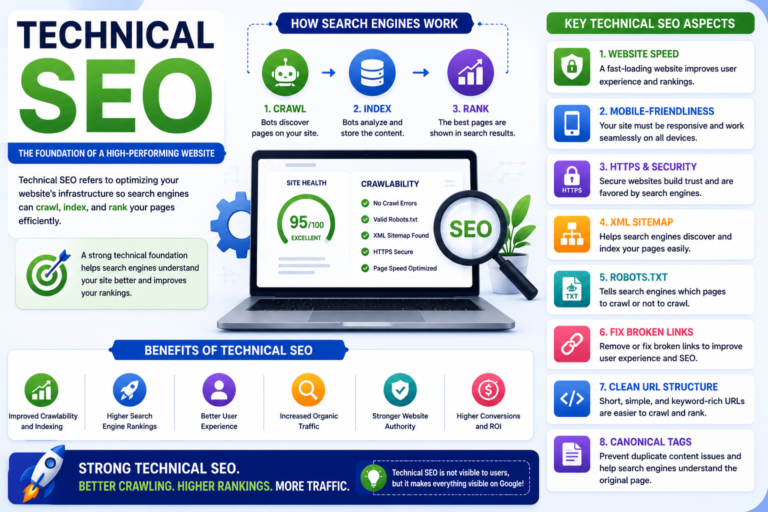
Technical SEO improves the backend structure of your website to help search engines crawl and index pages efficiently.
Key Elements
Website Speed
A fast-loading website improves rankings and user experience.
Mobile Optimization
Google prioritizes mobile-friendly websites because most users browse on smartphones.
Secure Website (HTTPS)
HTTPS encryption improves security and trust.
XML Sitemap
An XML sitemap helps search engines discover your pages faster.
Fix Broken Links
Broken links negatively impact SEO and user experience.
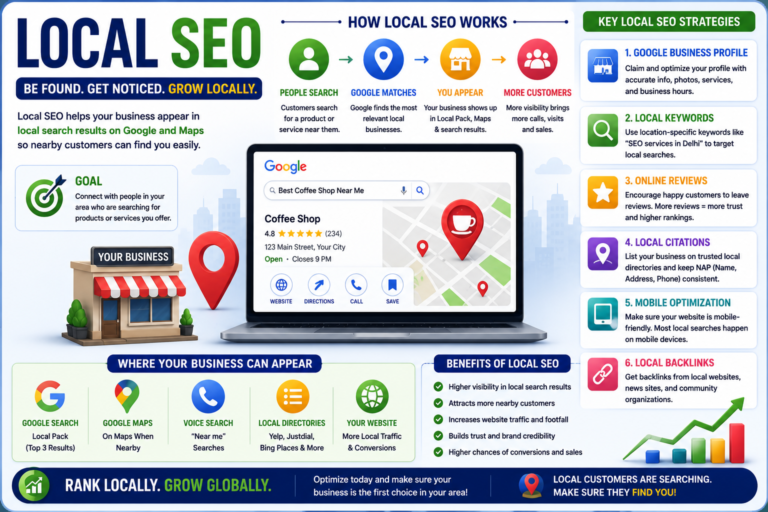
Local SEO Tips for Small Businesses
It helps businesses appear in location-based searches.
For example:
- “Best restaurant near me”
- “SEO agency in Delhi”
Local SEO Strategies
Create a Google Business Profile
A verified profile increases local visibility on Google Maps.
Use Local Keywords
Add city or location keywords naturally in your content.
Collect Customer Reviews
Positive reviews improve credibility and rankings.
Optimize for Mobile Users
Most local searches happen on mobile devices.
How to Rank Higher on Google
Ranking on Google requires a combination of strong strategies.
Proven Ways to Improve Rankings
Publish High-Quality Content
Consistent content creation helps Google understand your website authority.
Target the Right Keywords
Focus on keywords with:
- High search intent
- Low competition
- Relevant audience
Build Backlinks
Backlinks from trusted websites improve credibility.
Improve User Experience
Google values websites with:
- Fast speed
- Easy navigation
- Helpful content
Optimize for Featured Snippets
Use short answers, lists, and tables to increase visibility.
Best Free SEO Tools in 2026
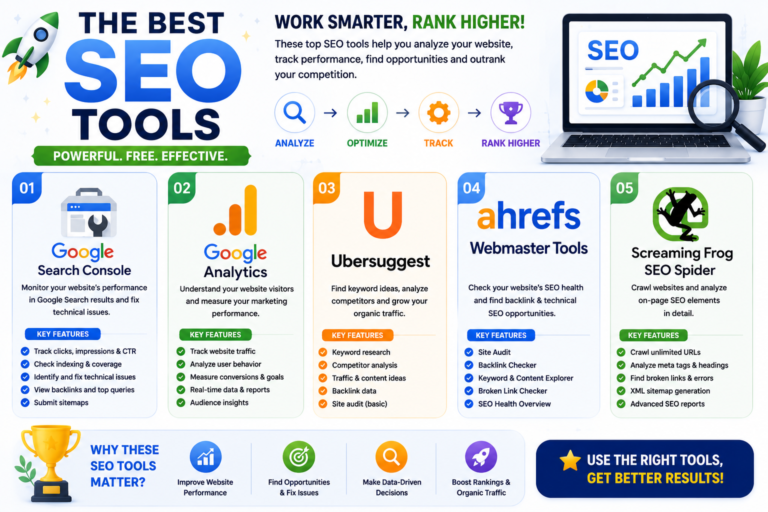
SEO tools help analyze performance, keywords, and rankings.
Popular Free SEO Tools
| Tool | Purpose |
|---|
| Google Search Console | Website performance tracking |
| Google Analytics | Traffic analysis |
| Ubersuggest | Keyword research |
| Ahrefs Webmaster Tools | Backlink analysis |
| Screaming Frog | Technical SEO audit |
Keyword Research Guide for Beginners
Keyword research is the foundation of successful SEO.
It helps identify what users are searching for online.
Types of Keywords
Short-Tail Keywords
Example: SEO
Long-Tail Keywords
Example: Best SEO tips for beginners
Long-tail keywords usually have lower competition and higher conversion rates.
Keyword Research Tips
- Use keyword research tools
- Analyze competitor keywords
- Focus on user intent
- Target question-based searches
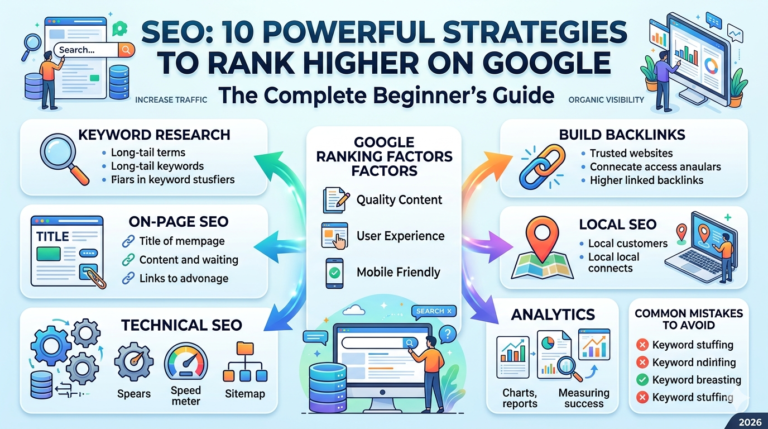
Google Ranking Factors You Need to Know
Google uses multiple ranking signals to determine search positions.
Important Ranking Factors in 2026
Content Quality
Helpful and original content ranks better.
Page Speed
Fast websites improve user experience.
Mobile Friendliness
Responsive websites perform better.
Backlinks
Authoritative backlinks improve trust.
User Experience
Low bounce rates and high engagement matter.
Keyword Optimization
Proper keyword placement improves relevance.
Common SEO Mistakes to Avoid
Avoid these common SEO mistakes:
- Keyword stuffing
- Duplicate content
- Ignoring mobile optimization
- Slow website speed
- Poor-quality backlinks
- Missing meta descriptions
Fixing these issues can significantly improve rankings.
Future of SEO in 2026
SEO continues evolving with technology and AI advancements.
Emerging SEO Trends
- AI-powered search results
- Voice search optimization
- Video SEO growth
- User intent-focused content
- Mobile-first indexing
Businesses that adapt to these trends will stay competitive.
CONCLUSION
SEO is essential for businesses and websites that want long-term online growth. From keyword research and on-page optimization to backlinks and technical SEO, every strategy contributes to better Google rankings.
By following the techniques discussed in this guide, you can improve visibility, attract organic traffic, and grow your website successfully in 2026 and beyond.