
What is digital marketing?
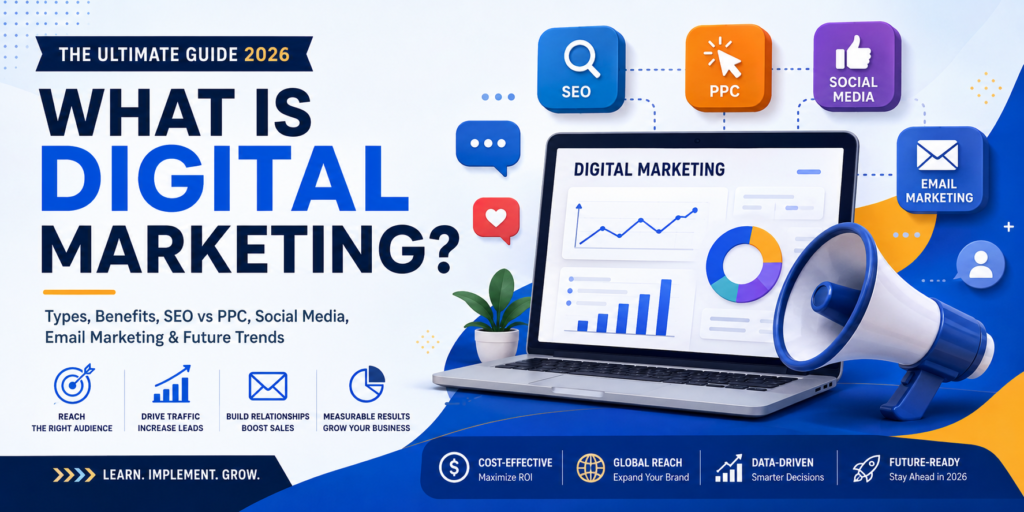
Digital marketing is the process of promoting products, services, or brands using online channels such as search engines, social media, email, websites, and paid advertising. Businesses use digital marketing to connect with their target audience, increase visibility, generate leads, and boost sales in a measurable and cost-effective way.
In today’s internet-driven world, digital marketing has become essential for businesses of all sizes. Whether you run a startup, local business, or global company, using online marketing strategies can help you reach potential customers faster than traditional advertising methods.
Why Digital Marketing Matters in 2026 !
The online marketplace is more competitive than ever. Consumers now search online before making purchasing decisions, which means businesses must maintain a strong digital presence.
Here are a few reasons why digital marketing is important in 2026:
-
- Increased online consumer activity
- Better audience targeting
- Higher return on investment (ROI)
- Real-time performance tracking
- Cost-effective advertising options
- Global reach for businesses
Digital marketing allows brands to engage with customers where they spend most of their time — online.
Why Digital Marketing Matters in 2026
The online marketplace is more competitive than ever. Consumers now search online before making purchasing decisions, which means businesses must maintain a strong digital presence.
Here are a few reasons why digital marketing is important in 2026:
- Increased online consumer activity
- Better audience targeting
- Higher return on investment (ROI)
- Real-time performance tracking
- Cost-effective advertising options
- Global reach for businesses
Digital marketing allows brands to engage with customers where they spend most of their time — online.
Types of Digital Marketing
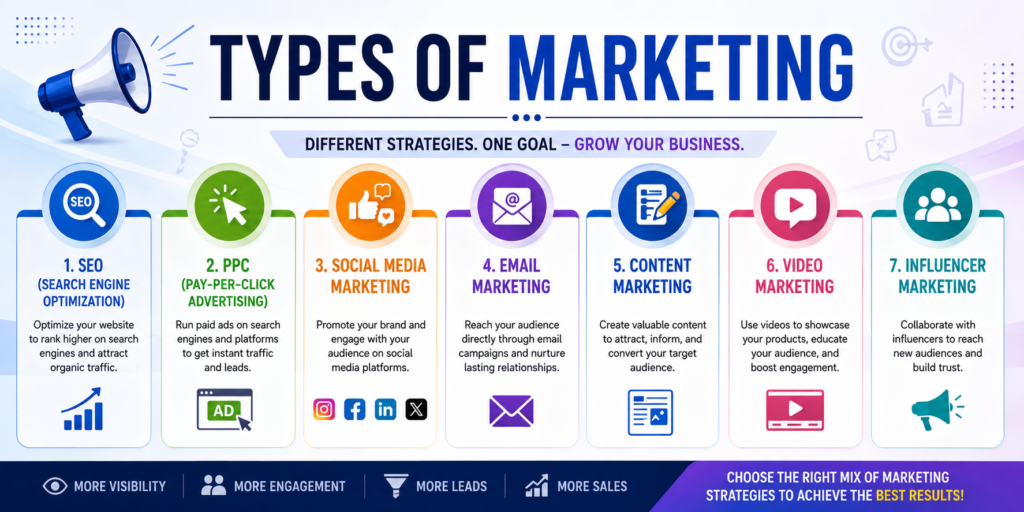
There are several forms of digital marketing, and each serves a unique purpose.
1. Search Engine Optimization (SEO)
SEO is the process of improving a website’s visibility on search engines like Google. The goal is to rank higher in organic search results and attract free traffic.
- Keyword research
- On-page optimization
- Technical SEO
- Link building
- Content marketing
2. Pay-Per-Click Advertising (PPC)
PPC is a paid advertising model where businesses pay each time someone clicks their ad. Popular PPC platforms include Google Ads and social media advertising platforms.
Benefits of PPC:
- Instant traffic
- Fast lead generation
- Advanced audience targeting
- Scalable advertising campaigns
SEO vs PPC: Which Is Better?
One of the most common questions related to what is digital marketing is the comparison between SEO and PPC.
| Feature | SEO | PPC |
|---|---|---|
| Traffic Source | Organic | Paid |
| Cost | Long-term investment | Pay per click |
| Results Speed | Slower | Immediate |
| Sustainability | Long-lasting | Stops when budget ends |
| Trust Level | Higher credibility | Sponsored visibility |
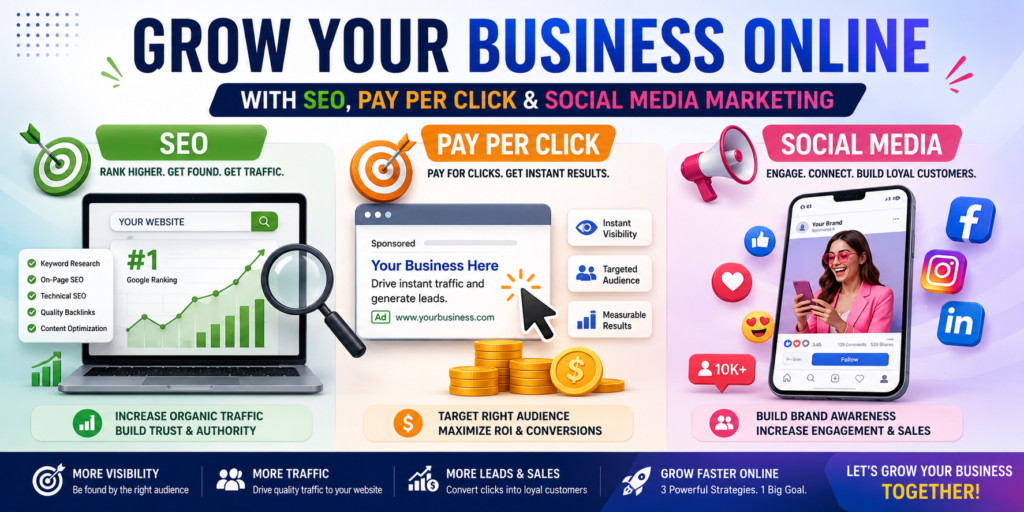
The best strategy often combines both SEO and PPC to maximize visibility and conversions.
Social Media Marketing
Social media marketing involves promoting content and engaging audiences on platforms such as Facebook, Instagram, LinkedIn, TikTok, and X.
Businesses use social media to:
- Build brand awareness
- Increase engagement
- Generate leads
- Drive website traffic
- Improve customer relationships
Successful social media marketing requires consistent posting, audience interaction, and high-quality content.
Email Marketing
Email marketing remains one of the highest ROI digital marketing strategies in 2026.
It allows businesses to communicate directly with subscribers through:
- Newsletters
- Promotional campaigns
- Product updates
- Personalized offers
- Automated workflows
Benefits of email marketing include:
- Strong customer retention
- Personalized communication
- Increased conversions
- Affordable campaign costs
A successful email campaign focuses on valuable content, attractive subject lines, and audience segmentation.
Benefits of Digital Marketing for Businesses
Understanding what is digital marketing also means understanding the advantages it offers businesses.
Better Audience Targeting
Digital marketing platforms allow businesses to target users based on:
- Age
- Location
- Interests
- Online behavior
- Purchase history
Cost-Effective Marketing
Compared to traditional advertising, digital marketing is more affordable and delivers measurable results.
Measurable Performance
Businesses can track:
- Website traffic
- Click-through rates
- Conversion rates
- Engagement metrics
- Revenue generated
Benefits of Digital Marketing for Businesses
Understanding what is digital marketing also means understanding the advantages it offers businesses.
Better Audience Targeting
Digital marketing platforms allow businesses to target users based on:
- Age
- Location
- Interests
- Online behavior
- Purchase history
Cost-Effective Marketing
Compared to traditional advertising, digital marketing is more affordable and delivers measurable results.
Measurable Performance
Businesses can track:
- Website traffic
- Click-through rates
- Conversion rates
- Engagement metrics
- Revenue generated
Increased Brand Awareness
Consistent online visibility helps businesses establish trust and authority in their industry.
Higher Conversion Rates
Digital campaigns are optimized using analytics and user behavior data, improving conversion performance over time.
Conclusion
So, what is digital marketing? It is one of the most powerful ways businesses can connect with customers, build brand awareness, and drive revenue in the digital age. From SEO and PPC to social media and email marketing, every strategy plays an important role in online business growth.
As technology evolves in 2026, businesses that invest in digital marketing will gain a significant competitive advantage. By understanding the latest trends and applying effective strategies, companies can achieve sustainable growth and long-term success online.